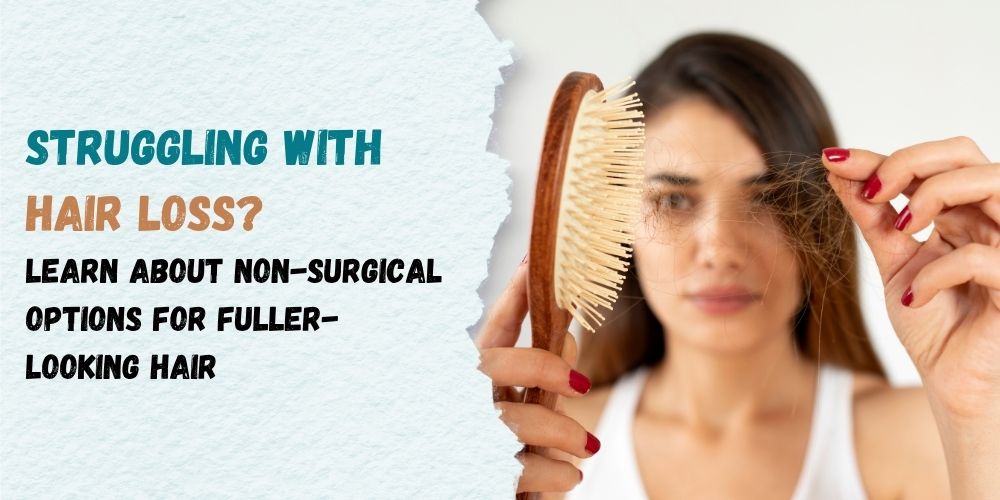
If your ponytail feels thinner, your part seems a little wider, or you’re suddenly finding far more hair in the shower than you used to, you’re not imagining it.
Hair thinning and excessive shedding are incredibly common—and for many women, they can feel especially frustrating because there isn’t always one obvious cause.
Hormonal changes, stress, genetics, nutritional deficiencies, rapid weight loss, medications and even major life events can all affect the hair growth cycle. And while the internet is full of supplements, serums and overnight promises, effective hair restoration starts with something much less exciting: Figuring out why your hair is thinning in the first place.
At DermaPrecision Aesthetics, we take a comprehensive approach to hair and scalp health. For appropriate patients, that may include KeraLase®, a non-surgical hair restoration treatment using LaseMD Ultra technology and KeraFactor®, but treatment should always begin with understanding the underlying problem.
Is It Hair Loss—or Hair Shedding?
Not all hair loss is the same.
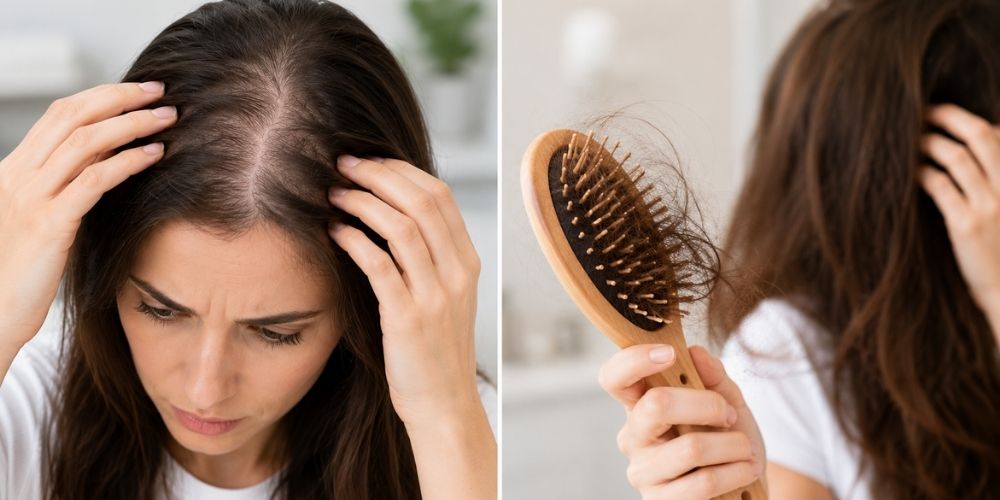
It’s normal to shed hair every day as individual follicles move through their natural growth cycle. But when significantly more hairs than usual shift into the shedding phase—or follicles begin producing progressively finer hairs—you may notice:
- A widening part
- More visible scalp
- A thinner ponytail
- Increased hair in your shower or brush
- Thinning around the temples
- Less volume at the crown
- Hair that simply doesn’t seem to grow as thick as it once did
These subtle changes are often the first signs that something is changing beneath the surface.
One of the most common causes of hair loss in women is female pattern hair loss, which frequently becomes more noticeable during the 40s, 50s and 60s. Hormonal changes around perimenopause and menopause may also contribute to changes in hair density.
The important part? Earlier intervention generally gives us more to work with.
Why Is My Hair Thinning?
There is rarely a universal answer.Some of the most common contributors include:
1. Hormonal Changes and Menopause
Estrogen, progesterone and androgen activity can all influence the hair growth cycle. During perimenopause and menopause, many women notice reduced density, a wider part or increased scalp visibility.
2. Genetics
Female pattern hair loss can be inherited from either side of the family. Rather than developing one distinct bald area, women often experience more diffuse thinning across the top of the scalp.
3. Stress
Major physical or emotional stress can trigger a condition called telogen effluvium, causing more hairs than usual to enter the resting and shedding phases at the same time. The trigger may actually occur several months before you notice the increased shedding.
4. Rapid Weight Loss and GLP-1 Medications
We are seeing far more conversations about hair loss following significant weight loss, particularly as medications such as semaglutide and tirzepatide have become more common.
Rapid weight loss itself can be a physiologic stressor. Reduced caloric intake may also make it more difficult to consume adequate protein, iron and other nutrients involved in healthy hair growth.
This type of shedding is frequently associated with telogen effluvium rather than permanent follicle loss—but identifying the actual cause still matters.
5. Nutritional Deficiencies
Protein, iron and certain vitamins and minerals all play a role in normal hair growth. Restrictive diets, changes in appetite, medical conditions or rapid weight loss may contribute to inadequate intake.
6. Medical Conditions and Medications
Thyroid disease, autoimmune conditions, hormonal disorders and certain medications can contribute to hair loss.
That is why sudden, severe, patchy or unexplained hair loss should not simply be treated cosmetically without considering whether further medical evaluation is appropriate.
What Is Non-Surgical Hair Restoration?
Hair restoration does not automatically mean a hair transplant.
Today, there are several non-surgical approaches designed to help preserve existing hair, support follicular health and improve the appearance of hair density.
Depending on the type and cause of hair loss, treatment options may include:
- Topical minoxidil
- Prescription medications when appropriate
- PRP or other regenerative treatments
- Light-based therapies
- Scalp and hair-growth treatments
- Correction of underlying nutritional or medical issues
- KeraLase and KeraFactor
- Combination therapy
There is no single treatment that is right for every patient.
In fact, hair restoration often works best when we stop looking for the proverbial magic bullet and start looking at the entire hair-growth environment.
What Is KeraLase?
KeraLase is an in-office, non-surgical hair and scalp treatment that combines LaseMD Ultra laser technology with KeraFactor Scalp Stimulating Solution.
KeraFactor is a professional hair and scalp treatment product designed specifically for thinning hair. Its proprietary formula contains a blend of biomimetic growth factors and proteins selected to support the scalp and hair follicles. Drug-free and hormone-free.
Rather than simply coating the hair to make it temporarily appear thicker, KeraFactor focuses on creating an optimal environment for healthier-looking hair.
During treatment, the 1927 nm LaseMD Ultra laser creates tiny non-ablative microchannels in the scalp. KeraFactor is then applied directly to the treated area, allowing the topical formulation to reach the scalp more effectively than simply applying it to an untreated surface.
What Is the Treatment Like?
Hair-restoration treatments with LaseMD Ultra + KeraFactor are performed in-office and are relatively quick. LaseMD Ultra is passed over the areas of concern on the scalp to create controlled microchannels. KeraFactor is then applied according to the treatment protocol. Because LaseMD Ultra is non-ablative, there is minimal downtime. The scalp may look slightly pink or feel warm or sensitive immediately following treatment, but patients can generally return to their normal activities quickly.
When Will I See Results?
This may be the most important expectation we set with patients:
Hair growth is slow.
Hair restoration is a process, not an overnight treatment. Hair grows in cycles, which means improvements in shedding, density, and overall hair quality take time to become noticeable. For this reason, a series of treatments is generally recommended rather than a single session.
As the hair-growth cycle progresses, patients may begin to notice changes in the appearance and quality of their hair. Results and timelines vary from person to person depending on the underlying cause and degree of hair thinning. Consistency is important, and your provider will recommend a treatment schedule based on your individual needs.
Is KeraLase Right for Everyone?
Hair loss can have many causes. Genetics, hormones, medications, stress, nutritional deficiencies and certain medical conditions can all contribute to thinning or shedding. A cosmetic hair-restoration treatment may be helpful for appropriate candidates, but sudden, severe or unexplained hair loss should be evaluated to determine whether an underlying medical issue could be contributing.
KeraLase vs. PRP, Minoxidil and Other Hair-Loss Treatments
One of the most common questions we hear is: “Which hair-growth treatment is best?”
Our answer: it depends.
KeraLase vs. Minoxidil
Topical minoxidil is one of the most established treatments for female pattern hair loss and remains an important option for many patients.
KeraLase offers a different approach by combining laser-assisted scalp treatment with a drug-free topical growth-factor and peptide formulation.
Some patients prefer one approach; others may benefit from using complementary strategies together under medical guidance.
KeraLase vs. PRP
PRP involves drawing a patient’s blood, concentrating the platelet-rich portion and injecting it back into the scalp.
KeraLase does not require a blood draw or scalp injections. Instead, it uses LaseMD Ultra to prepare the scalp before topical KeraFactor application.
For patients who dislike needles or want a treatment with minimal downtime, this can make KeraLase particularly appealing.
KeraLase vs. Hair Transplant
A hair transplant surgically relocates hair follicles from one area of the scalp to another.
KeraLase is completely non-surgical.
These treatments also serve very different patients. Someone with advanced permanent follicular loss may require a very different treatment strategy than someone beginning to notice diffuse thinning or decreased density.
A Different Approach to Thinning Hair
Hair restoration has evolved far beyond simply recommending another shampoo or covering areas of thinning. By combining advanced technology like LaseMD Ultra with a targeted scalp treatment like KeraFactor, we can take a more comprehensive approach—supporting the scalp, targeting areas of concern and helping patients work toward healthier, fuller-looking hair. If you’ve started noticing increased shedding, a widening part, reduced density, or simply feel that your hair isn’t as full as it once was, it may be time to look beyond your shampoo bottle.
At DermaPrecision Aesthetics, our approach to non-surgical hair restoration in Scottsdale is intentionally individualized. We look at what you’re experiencing, how long it’s been happening, potential contributing factors and your goals before recommending a treatment plan.
If you’ve noticed increased shedding, thinning hair or changes in your hair density, schedule a Hair & Scalp Consultation at DermaPrecision Aesthetics in Scottsdale.
We’ll help you understand what may be contributing to the change and whether KeraLase or another hair-restoration strategy makes sense for you.
Until next time,
XO,
Christina…. Always here to help you enhance your inner radiance