
Chemical peels and laser resurfacing are two common approaches to improving skin tone, texture, and visible signs of sun damage. Both treatments can help address concerns such as dark spots, rough skin, and fine lines, but they work in different ways.
A chemical peel uses a chemical solution to exfoliate the skin, while laser resurfacing uses targeted light energy to create controlled changes in the skin. The results, recovery time, and potential risks depend on the treatment used, its intensity, and your individual skin characteristics.
So, how do you decide between a chemical peel and laser resurfacing? Understanding how each treatment works, what it can address, and what recovery involves can help you have a more informed conversation with a qualified skincare professional.
Chemical Peel vs. Laser Resurfacing at a Glance
| Feature | Chemical Peel | Laser Resurfacing |
| How it works | Uses exfoliating solutions to encourage skin renewal | Uses controlled laser energy to target selected skin concerns |
| Common concerns | Dullness, uneven tone, selected pigmentation, and surface texture | Sun damage, selected pigmentation, uneven texture, and certain fine lines |
| Treatment options at DermaPrecision® | BioRePeel and The Perfect Derma Peel | LaseMD Ultra |
| Downtime | Ranges from minimal shedding to more noticeable peeling | Depends on the laser, settings, and treatment intensity |
| Number of sessions | Depends on the peel and skin response | Depends on the device, concern, and treatment plan |
| Starting price at DermaPrecision® | BioRePeel: $300 per session | LaseMD Ultra: $350+ for small areas; $700+ for large areas |
| Best next step | Select a peel based on your skin and goals | Determine whether laser treatment is appropriate for your skin |
These are general comparisons. Different laser devices and chemical peel formulations can produce different results and recovery experiences. Your provider should recommend a treatment based on an assessment of your skin.
What Is a Chemical Peel?
A chemical peel involves applying a chemical solution to the skin to remove or loosen layers of damaged surface cells. This process encourages skin renewal and can improve the appearance of certain pigmentation concerns, rough texture, and fine lines.
Chemical peels vary in strength and depth. Some work primarily on the outermost layer of skin, while deeper peels affect more layers and generally involve greater recovery time and risk.
The most suitable peel depends on the concern being treated, skin sensitivity, skin tone, and previous treatment history.
At DermaPrecision®, two options to discuss with your provider include:
BioRePeel
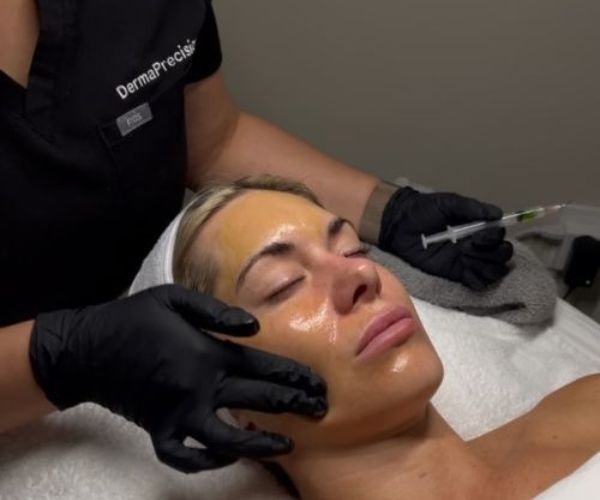
BioRePeel is a professional peel option designed to exfoliate and support skin renewal. It may be considered for concerns such as dullness, uneven skin tone, visible pores, fine lines, and selected acne-related marks.
It is designed for relatively minimal shedding and downtime compared with more intensive peeling treatments, although individual responses vary.
The Perfect Derma Peel
The Perfect Derma Peel is another professional option that may be considered for uneven pigmentation, acne-related concerns, and visible signs of skin aging.
Its suitability, expected results, and recovery requirements depend on your skin condition and the treatment plan recommended by your provider.
What Is Laser Resurfacing?
Laser resurfacing uses concentrated light energy to target specific structures or layers within the skin. Depending on the device and settings, it can address concerns such as sun damage, uneven pigmentation, rough texture, and some fine lines.
Laser treatments vary considerably. Their effects depend on the wavelength, energy settings, treatment pattern, and depth of the targeted tissue.
LaseMD Ultra Laser Resurfacing
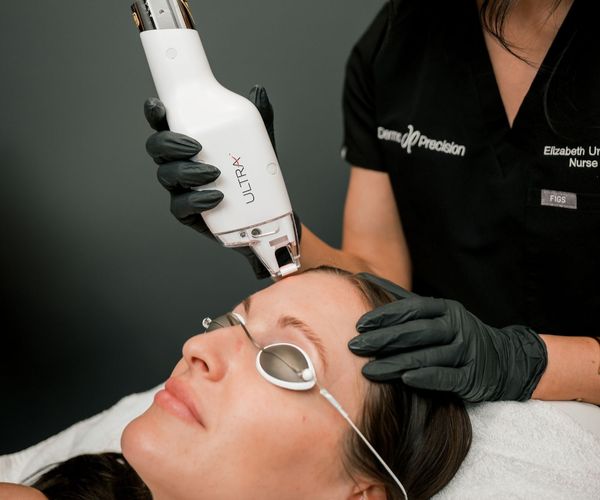
LaseMD Ultra is a non-ablative fractional laser treatment that uses a 1927 nm thulium laser.
Non-ablative means the treatment does not intentionally remove the entire outer layer of skin. Fractional means the laser treats microscopic portions of the treatment area rather than every point uniformly.
The treatment creates controlled microchannels that support skin renewal and may help improve selected pigmentation and textural concerns.
LaseMD Ultra may be considered for:
- Sun spots and selected forms of sun-related pigmentation
- Uneven skin tone
- Dullness and rough texture
- Certain fine lines and signs of photoaging
The treatment is not appropriate for every skin concern or every patient. Your provider should assess the cause of your pigmentation, skin sensitivity, and history of previous treatments before recommending laser resurfacing.
Chemical Peel vs. Laser Resurfacing for Different Skin Concerns
The most useful way to compare these treatments is to consider what you want to improve rather than assuming one method is always more effective.
1. Dark Spots and Sun Damage
Dark spots may develop after years of ultraviolet exposure, inflammation, hormonal changes, or other triggers. Some superficial peels can help improve mild discoloration, while certain lasers target pigment associated with sun damage.
The distinction matters because not all pigmentation responds in the same way. Sun spots, post-inflammatory hyperpigmentation, and melasma have different causes and may require different approaches.
For melasma in particular, heat and skin irritation can sometimes aggravate pigmentation. A treatment that improves one type of dark spot may not be appropriate for another.
What matters most: Identifying the cause of the pigmentation before choosing a peel or laser.
2. Uneven Skin Tone and Texture
Chemical peels may help improve surface roughness and mild uneven tone by removing accumulated skin cells. Certain laser treatments can target pigmentation and texture through controlled energy delivery.
The best option depends on whether the concern is mainly surface-level discoloration, persistent sun damage, roughness, or a combination of issues.
What matters most: The depth and type of skin changes, rather than simply how uneven the skin looks.
3. Fine Lines
Some chemical peels can soften the appearance of mild fine lines by improving surface texture. Laser resurfacing may help with selected fine lines by targeting tissue at different depths, depending on the laser used.
Neither treatment can fully address every cause of wrinkles. Deeper folds and expression lines may require a different treatment approach.
What matters most: Whether the lines are primarily related to surface texture, sun damage, or other changes in the skin.
4. Acne Marks and Acne Scarring
Post-acne discoloration and actual acne scars are different concerns. Discoloration refers to changes in skin color, while scars involve changes in skin structure.
Chemical peels may help selected cases of post-acne discoloration. Certain laser resurfacing treatments may be considered for some types of acne scarring, depending on scar depth, skin type, and risk factors.
Raised scars, deep scars, and ongoing active acne may need different management. Neither a peel nor a laser should be assumed to treat every type of acne scar.
What matters most: Determining whether the primary concern is discoloration, depressed scarring, raised scarring, or active acne.
5. Melasma and Persistent Pigmentation
Melasma requires particular caution because sunlight, hormonal influences, heat, and irritation can contribute to recurring discoloration.
Although certain laser treatments and chemical peels may help selected patients, either procedure can aggravate pigmentation in some circumstances. More intensive treatment is not necessarily better.
A provider should review your skin tone, pigmentation history, current skincare routine, and previous treatment response before recommending an approach.
Chemical Peel vs. Laser Resurfacing: What Is the Downtime?
Recovery is an important consideration when choosing between these treatments, particularly if you have work commitments, travel plans, or upcoming events.
Chemical Peel Recovery
Chemical peel downtime depends on the formulation and depth of the peel.
Some treatments, such as BioRePeel, are designed to involve minimal visible shedding. Other peels may produce more noticeable peeling, redness, dryness, and sensitivity.
Your provider should explain what to expect from the specific peel being recommended rather than relying on general recovery estimates for all chemical peels.
Laser Resurfacing Recovery
LaseMD Ultra may cause redness, a rough or sandpaper-like texture, temporary darkening of pigmented spots, and flaking.
Visible skin changes may last approximately 3–7 days, although recovery varies with the treatment settings and your skin’s response.
You may be able to return to normal activities before your skin looks fully settled. Plan your appointment around your schedule and follow the aftercare instructions provided by your clinician.
Important: Chemical peels do not always have less downtime than laser treatments. Compare the specific peel and laser procedure, including the intensity and expected recovery, before deciding.
How Many Treatments Will You Need?
The number of sessions depends on the treatment, the concern being addressed, and how your skin responds.
- Chemical peels: Some people may see improvement after one treatment, while others benefit from a planned series of superficial peels. Medium-depth and deep peels follow different treatment considerations.
- Laser resurfacing: Some concerns may improve after one session, but a series may be recommended for gradual improvement. The appropriate interval between sessions depends on the laser and recovery.
- Combination treatment plans: A provider may recommend different treatments at separate times if more than one concern is present. Combining treatments is not necessary for everyone.
A realistic plan should define the intended outcome, estimated number of sessions, expected recovery, and how progress will be evaluated.
Chemical Peel vs. Laser Resurfacing: Cost Comparison
Treatment cost depends on the procedure, treatment area, number of sessions, and recommended plan.
At DermaPrecision® in Scottsdale, the listed starting prices are:
- LaseMD Ultra: $350+ for small areas and $700+ for large areas.
- BioRePeel: $300 per session.
The lowest starting price does not necessarily mean the lowest overall cost. A treatment that requires multiple sessions may cost more over time than a different option with a higher price per appointment.
When comparing treatments, ask for an estimate that includes the expected number of sessions and any recommended maintenance. Confirm current prices with the clinic before booking.
Are Chemical Peels or Laser Treatments Safe for Every Skin Tone?
No. Both treatment categories require careful selection based on skin tone, sensitivity, medical history, and the condition being treated.
Some skin tones have a higher risk of post-inflammatory hyperpigmentation after irritation or injury. This can occur after chemical peels as well as laser treatments. The risk depends on the specific treatment, its intensity, the individual’s history, and how the skin heals.
A qualified provider should assess your skin before recommending a treatment and discuss potential side effects, including:
- Redness, irritation, or swelling
- Temporary darkening or lightening of the skin
- Prolonged sensitivity
- Infection or scarring in certain circumstances
- Worsening of an existing pigmentation condition
Tell your provider about previous pigment changes, cold sores, active skin conditions, medications, recent tanning, and any history of unusual healing. These details can affect whether a treatment should proceed or be postponed.
Can You Combine Chemical Peels and Laser Resurfacing?
Sometimes, but combining treatments requires planning. Using a peel and a laser too close together may increase irritation and the risk of unwanted pigment changes or delayed healing.
A provider may recommend treating one concern first, allowing the skin to recover, and then reassessing whether another treatment is appropriate. The sequence and interval depend on the specific procedures and the condition being treated.
More treatments do not necessarily mean better results. A carefully selected approach may be more appropriate than trying to address every concern at once.
Which Treatment Should You Choose?
A Chemical Peel May Be Worth Considering If You:
- Prefer an exfoliating treatment without laser energy.
- Want to address dullness, uneven tone, or selected superficial skin concerns.
- Are interested in a peel designed for minimal visible shedding.
- Want to compare options based on skin sensitivity, cost, and recovery.
- Have been assessed by a provider who considers a chemical peel appropriate for your skin.
Laser Resurfacing May Be Worth Considering If You:
- Want to address selected pigmentation or sun-damage concerns.
- Also want to improve uneven texture or certain fine lines.
- Are comfortable planning around the recovery associated with the selected laser.
- Want to discuss a fractional laser treatment such as LaseMD Ultra.
- Have been assessed by a provider who determines that laser treatment is appropriate.
If your concerns overlap, your provider may discuss both options before recommending one. The decision should reflect your skin’s needs rather than a universal ranking of laser treatments over chemical peels or vice versa.
Can You Combine Chemical Peels and Laser Resurfacing?
Sometimes, but combining treatments requires planning. Using a peel and a laser too close together may increase irritation and the risk of unwanted pigment changes or delayed healing.
A provider may recommend treating one concern first, allowing the skin to recover, and then reassessing whether another treatment is appropriate. The sequence and interval depend on the specific procedures and the condition being treated.
More treatments do not necessarily mean better results. A carefully selected approach may be more appropriate than trying to address every concern at once.
Frequently Asked Questions
Is a chemical peel better than laser resurfacing?
Neither treatment is universally better. Chemical peels may be suitable for exfoliation and selected superficial skin concerns, while laser resurfacing may be considered for particular pigmentation and texture concerns. The best option depends on your skin and treatment goals.
Which is better for dark spots: a chemical peel or laser?
Both may improve selected forms of dark spots. However, sun spots, post-acne marks, and melasma can require different approaches. Have the cause of the pigmentation assessed before choosing a treatment.
Does laser resurfacing have more downtime than a chemical peel?
Not always. Recovery depends on the laser device and settings, as well as the peel formulation and depth. LaseMD Ultra may cause visible skin changes for approximately 3–7 days, while chemical peel recovery ranges from minimal shedding to more noticeable peeling.
How much does laser resurfacing cost in Scottsdale?
At DermaPrecision®, LaseMD Ultra starts at $350+ for small areas and $700+ for large areas. BioRePeel is listed at $300 per session. Confirm current pricing and your recommended treatment plan with the clinic.
Can chemical peels and laser resurfacing treat acne scars?
Both may help selected acne-related marks or textural concerns, but flat post-acne discoloration differs from indented or raised scars. The appropriate treatment depends on the type and severity of scarring.
Is laser resurfacing safe for darker skin tones?
Some laser treatments may be appropriate for darker skin tones when carefully selected and performed with suitable settings. However, laser procedures and chemical peels can both trigger unwanted pigmentation. An individualized assessment is important, especially if you have a history of PIH or melasma.
Can I get a chemical peel or laser treatment before an event?
Timing depends on the treatment, your skin’s response, and the amount of visible recovery you can accommodate. Discuss upcoming events with your provider and allow sufficient time for your skin to settle.
Find the Right Skin Treatment at DermaPrecision®
Choosing between a chemical peel and laser resurfacing starts with understanding your skin concerns, treatment goals, and tolerance for recovery.
At DermaPrecision® in Scottsdale, AZ, treatment options include LaseMD Ultra, BioRePeel, and The Perfect Derma Peel. A personalized skin assessment can help determine which approach is appropriate for your needs and whether additional treatments should be considered.
Ready to explore your options? Book a consultation with DermaPrecision® to discuss your skin goals and develop an individualized treatment plan.